PROJECTS
Projects
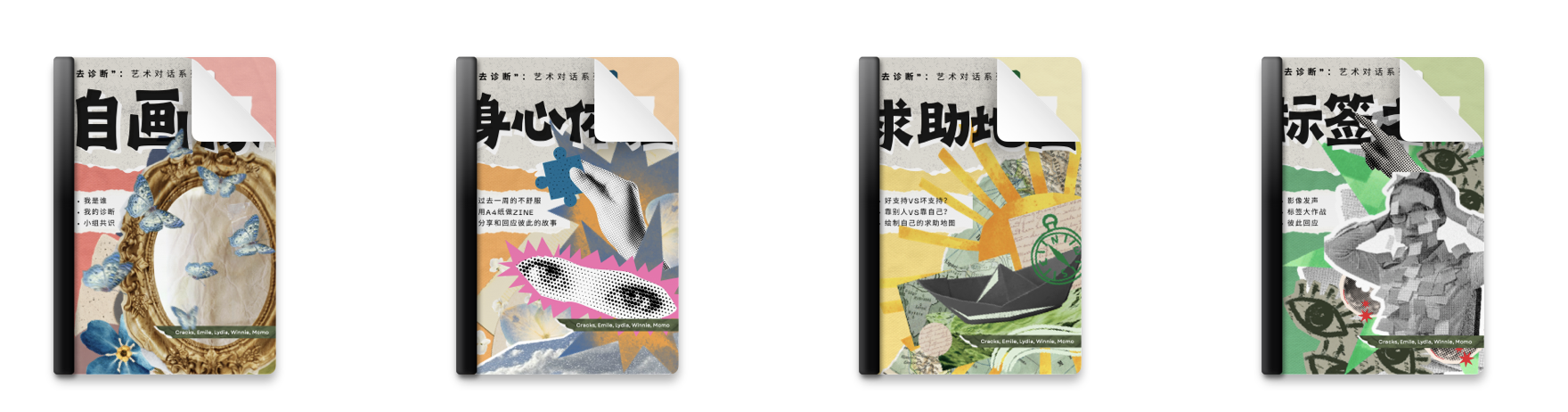
De-diagnosing is an arts-based open dialogue project initiated by people with lived experience who hold multiple roles in mental health, including self-advocates, artists, counsellors, social workers and psychiatrists. Participants negotiate the themes together. Through photography, painting and zine-making, they bring personal narratives, professional reflections and fragments of feeling into conversation, without merging them into a single voice or standardized conclusion.
The Chinese title plays on the multiple meanings of qu: it can mean going towards diagnosis, entering a process in which clinical terms name and make sense of experience; it can also mean removing diagnosis, undoing or moving beyond diagnostic labels.
We deliberately retain this ambiguity. Diagnosis is a powerful intervention that can reshape how a life is understood, narrated and lived. The project holds the tension between entering and leaving diagnosis, and between being defined and redefining oneself.
Despite signs of change in China’s mental health field, including limited attention to psychosocial factors and symbolic recognition of lived experience, a single biomedical psychiatric narrative continues to dominate its structure. First-person experience is often absorbed into existing medical frameworks, rather than recognized as knowledge that can challenge diagnostic categories and explanatory models. Both professional services and grassroots initiatives can avoid disagreement, narrowing the space for critical dialogue and other possibilities.
The group offers a place to practise speaking in one’s own voice, exchange different perspectives, vent frustrations and express dissatisfaction: a record from the lived realities of distress, for ourselves and others.
Outcomes8 dialogue sessions, documented in 7 booklets.
Following a series of student suicides in April 2021, A Perch for the Thornbirds used an open letter and a shared online document to open up a collective response on campus. Taking “healing spaces” as a starting point, the project invited students to express grief, anger and unease, share places where they found a sense of support, and voice what they wanted to change about their campus environment.
Initiated and led by Tuanzi in Nanjing, Hello brought people together for peer conversations and group activities around inferiority, anxiety, kindness and people-pleasing.
Anyone in our community can host an online tea party, and anyone with time and interest can join. We might chat, work through a problem together, learn about a shared topic, or exchange skills.
A Perch for the Thornbirds brings together films addressing mental health, curates screenings and post-screening conversations, and uses moving images to open up public discussion and mutual support. We have obtained directors’ permission to screen a number of films from China and beyond, and maintain relationships with screening groups and film media in China.
We see moving-image practice as a social prescription for the symptoms of our times. Its possibilities within mental health work remain far from exhausted.
Our applied theatre practice includes Playback Theatre, performance theatre, script study and Theatre of the Oppressed. We support, fund and promote other groups’ projects, help emerging theatre groups develop through training, and work with young students and activists in the Everyday Theatre collective.
Social Prescribing brought people with lived experience together outside institutional settings. Through reading groups, film discussions, theatre workshops and making things together, the project created space to speak openly about distress, share experiences and find support in one another.
Amid uneven professional standards, inconsistent fees and a shortage of support beyond medical care, it sought to reach people excluded from existing services or unable to afford them. The project also invited participants and the wider public to consider how economic, cultural and other social conditions shape our lives and mental health.